

Cross-examination is one of the most critical pillars of the English criminal justice system. It is the mechanism through which the defence challenges the credibility and accuracy of prosecution evidence. Its goal is simple but vital: to test whether a witness is being accurate and if their story can truly be relied upon.
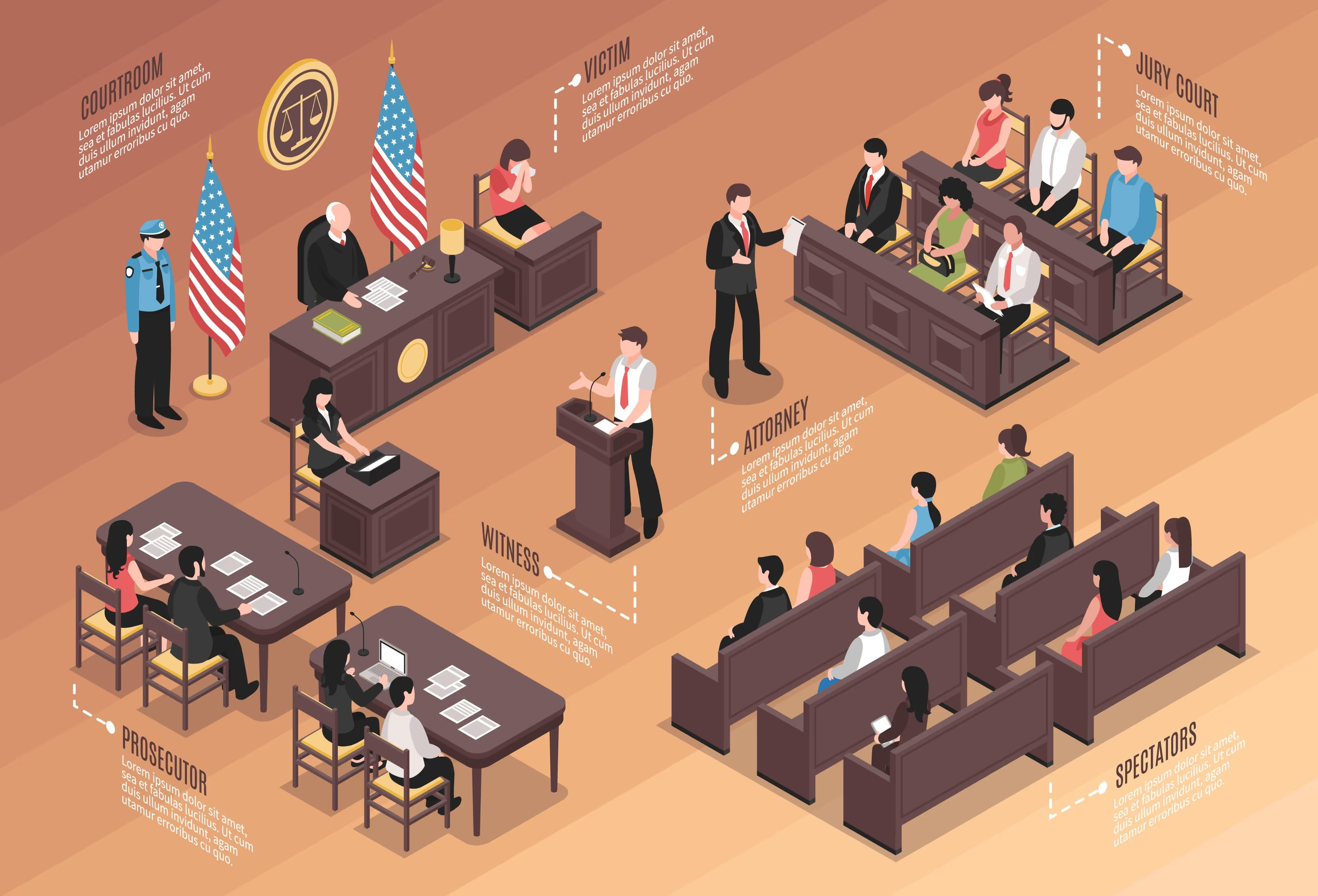
In the UK, we use an adversarial system. Think of a trial like a formal contest between two opposing sides: the Prosecution (who bring the charges) and the Defence (who represent the accused). The "truth" is found by letting both sides test each other’s evidence in front of a neutral jury, with a judge acting as the referee to ensure fair play.
How Cross-Examination Works
In a trial, a witness usually speaks twice. First, they are questioned by the lawyer who called them; this is called examination-in-chief. During this stage, the witness tells their story in their own words.
Then comes cross-examination. This is when the opposing lawyer gets their turn. It serves three main functions:
- Spotting holes: Finding inconsistencies in the witness’s story.
- Testing memory: Checking if the witness actually saw what they think they saw.
- Giving an alternative: Presenting the defendant’s version of events.
The best lawyers do not usually shout like they do in films. Instead, they use a calm, measured tone to guide a witness into admitting mistakes.
The Power of "Leading Questions"
During the first stage of questioning (examination-in-chief), lawyers are not allowed to "lead" their own witnesses. They must ask open questions, like "What did you see?"
However, in cross-examination, lawyers are allowed—and indeed required—to use leading questions. These are questions that suggest the answer the lawyer wants to hear.
This technique allows the lawyer to control the pace of the conversation and prevents the witness from giving long, rambling speeches that might distract the jury.
Honest but Wrong: The Three Pillars
A common mistake people make is thinking that if a witness is "honest," they must be right. But a witness can be 100% sincere and still be 100% mistaken. Lawyers focus on three pillars to demonstrate this distinction:
- Opportunity: Was the witness actually in a position to see the event clearly?
- Perception: Was it dark? Were they stressed? Were they wearing their glasses?
- Memory: Has their story changed in the months since the event happened?
Protecting the Vulnerable
In the past, cross-examination could be an aggressive and frightening experience. However, the Youth Justice and Criminal Evidence Act 1999 changed the rules to protect children and people with communication difficulties.
Today, the court uses "Special Measures" to ensure vulnerable witnesses can give their best evidence without being intimidated.
These measures include:
- Screens: Placing a curtain or screen around the witness box so they do not have to look at the defendant.
- Live Links: Allowing the witness to speak to the court via a video camera from a separate room.
- Pre-recorded Evidence: Recording the cross-examination weeks before the trial starts, sparing the witness the pressure of a live courtroom.
The "Fair Play" Rule: Putting the Case
There is a fundamental rule in English law that you cannot "ambush" a witness. If a lawyer intends to suggest to the jury that a witness is lying or mistaken, they must "put their case" to the witness first.
This means the lawyer must say something like: "I suggest to you that you didn't actually see my client at the scene." This ensures fairness by giving the witness a chance to respond to the allegation while they are still on the stand.
The Judge's Watchful Eye
While the lawyers do the questioning, the judge acts as more than just a referee. They have an important responsibility to protect witnesses from unfair treatment.
A judge will step in if cross-examination becomes:
- Oppressive: Asking the same question over and over to wear down a witness
- Harassing: Using an aggressive tone designed to intimidate rather than test evidence
- Irrelevant: Straying into areas that have nothing to do with the case
This is especially important when vulnerable witnesses are involved. The court must balance the defendant's right to challenge evidence with the witness's right to be treated with dignity.
Expert Witnesses
Cross-examining an expert—like a forensic scientist or a doctor—requires a different set of skills. Unlike normal witnesses, experts are allowed to give opinions.
To challenge them, a lawyer must understand the science behind the opinion. They will focus on the methodology: Was the lab equipment calibrated correctly? Is there a newer scientific study that contradicts their findings? This often requires the defence to hire their own expert to find weaknesses in the prosecution's science.
Behind the Scenes: The Lawyer's Preparation
While the cross-examination happens in the courtroom, the real work is done weeks in advance. A lawyer rarely just "wings it."
- The Paper Trail: Lawyers pour over every statement the witness has ever made—to the police, in emails, or in previous hearings—looking for any change in their story.
- The Roadmap: A golden rule for advocates is: "Never ask a question you don't already know the answer to." They prepare logical loops; they know exactly what document to show the witness if they answer "No" to a crucial question.
The Art of Timing: When to Press and When to Pause
A skilled cross-examiner knows that how they ask questions is just as important as what they ask.
- The Rhythm Matters: Rapid-fire questions can expose a dishonest witness who struggles to keep their lies straight. But fire questions too quickly at a nervous, honest witness, and the jury will think you're being unfair.
- Strategic Pauses: Sometimes the most powerful moment is the silence after a damaging answer. A well-timed pause lets the jury absorb what they've just heard and draw their own conclusions.
- Knowing When to Stop: There's an old saying among trial lawyers: "When you've made your point, sit down." Asking one question too many can undo all your good work if the witness recovers and explains away the contradiction.
The best cross-examinations feel almost like a conversation—controlled, measured, and purposeful.
The Jury's Perspective
In a real UK court, the lawyer who shouts the loudest rarely wins.
- The "Bully" Trap: If a lawyer is too aggressive with a nervous witness, the jury may stop listening to the facts and start feeling sorry for the witness. The lawyer then looks like a bully, which damages their client's case.
- The "Aha!" Moment: Jurors prefer to reach their own conclusions. When a juror notices a contradiction themselves, it is much more persuasive than being told what to think by a lawyer.
Modern Challenges: Digital Evidence
Today, cross-examination isn't just about what someone "saw." It is often about what their phone says they did. Lawyers now use metadata (data about data) to challenge witnesses.
For example, if a witness claims they were at home during a crime, a lawyer might use GPS data from their phone or the timestamp on a social media post to prove they were actually somewhere else. This has made trials more complex, requiring lawyers to be as comfortable with technology as they are with the law.
Conclusion
Whether using ancient common law principles or modern digital forensics, the purpose of cross-examination remains the same. It ensures that no person loses their liberty based on evidence that hasn't been thoroughly, fairly, and rigorously tested.

"Compliance is not a destination but a discipline. Those who master it gain freedom to operate with confidence."
"The difference between struggling with regulations and thriving within them lies in how early you build compliance into your strategy."

Legal disclaimer
The content provided in this blog post is for informational purposes only and does not constitute legal advice. Cross examination techniques and criminal procedure rules discussed here are based on current English law but may be subject to change. Any person facing criminal charges should seek immediate advice from a qualified criminal defence solicitor or barrister. This firm does not accept liability for any decisions made on the basis of information contained in this article. Access to certain restricted legal templates and case materials requires explicit confirmation that you understand these limitations and accept full responsibility for your use of such materials.
FAQs
Common questions about compliance and regulatory frameworks
Cross examination is the questioning of a witness by the opposing party's advocate during a trial. It allows the defence to test the reliability and credibility of prosecution evidence through leading questions and careful probing of inconsistencies.
No. If you give evidence in a criminal trial, you must submit to cross examination by the opposing party. This is a fundamental right of the defence and a core principle of the adversarial system.
There is no fixed time limit for cross examination. However, judges can intervene if questioning becomes oppressive, repetitive, or unnecessarily prolonged. The court must balance the right to test evidence with fairness to witnesses.
Leading questions are questions that suggest the answer the questioner wishes to receive. They are permitted during cross examination but not during examination in chief, and they form the primary tool for controlling witness testimony.
Yes. The Youth Justice and Criminal Evidence Act 1999 provides special measures for vulnerable witnesses, including children and those with communication difficulties. These may include screens, video links, or pre-recorded evidence.